



 Home
Markets & Applications
Defense
Knowledge Center
Detection, signatures & tracking
Acoustic Intelligence Powered by GRAS
The challenge: reliable acoustic sensing
Defense acoustic sensing combines demanding measurement requirements with exposure to impulse noise, weather, vibration and electromagnetic interference. This case study describes GRAS’ approach to selecting, protecting and integrating microphones for tactical sensing systems.
Microphone engineering and integration
Acoustic performance
Low self-noise and suitable dynamic range support the detection of quiet sources alongside high-level acoustic events.
Environmental analysis
Microphone designs account for temperature, humidity, shock, vibration, dust and water exposure.
Platform integration
Mechanical, electrical and data-interface customization supports sensor arrays, vehicles, UAVs and soldier systems.
Validation and documentation
The source describes environmental and electromagnetic requirements, traceability and lifecycle support.
Applications and deployment considerations
- Acoustic detection and situational awareness
- UAV, ground-vehicle and distributed-sensor integration
- Mounting and physical protection for operational use
- Repeatable sensor performance in demanding environments
Download the case study

Acoustic Intelligence Powered by GRAS
Read the full case study for GRAS’ approach to acoustic performance, environmental requirements and tactical-platform integration.
Related resources on acoustic sensing
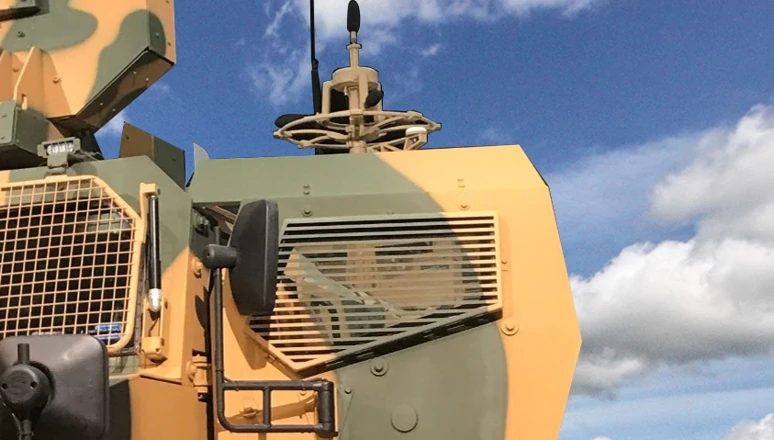
Acoustic Source Localization & Identification
Acoustic sensors for triangulation, source identification and weather-resilient surveillance systems.
Read resourceContact an Expert

Meet the Axiometrix Defense Team
Get tailored guidance for your program, test plan, or procurement.